Sep 28, 2026
A professional Gel Polish Manufacturer must compare more than visual sparkle when selecting reflective, glitter, or shimmer gel polish. Salon owners, nail technicians, distributors, and private-label buyers also need reliable curing, stable formulas, predictable wear, easy application, attractive packaging, and a finish that matches local customer preferences.
This guide compares the three finishes through the factors that matter during purchasing and daily salon use. It focuses on appearance, pigment behavior, application, curing, wear stability, customer demand, product positioning, and the most suitable market for each finish.

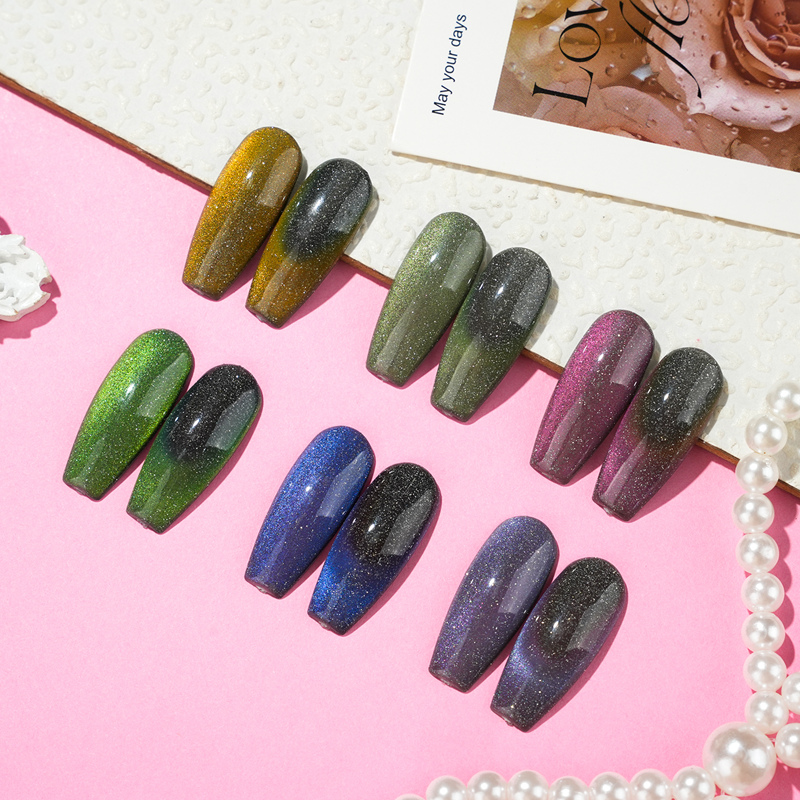
Reflective gel polish contains particles designed to return a strong flash when exposed to direct light. Under normal indoor lighting, it may look like a dense glitter or metallic polish. Under a camera flash, salon spotlight, or strong sunlight, the particles create a bright reflective effect.
Glitter gel polish uses visible glitter particles to create sparkle across the nail. The glitter may be fine, medium, or chunky, and the particles may be suspended in a clear, tinted, or opaque base.
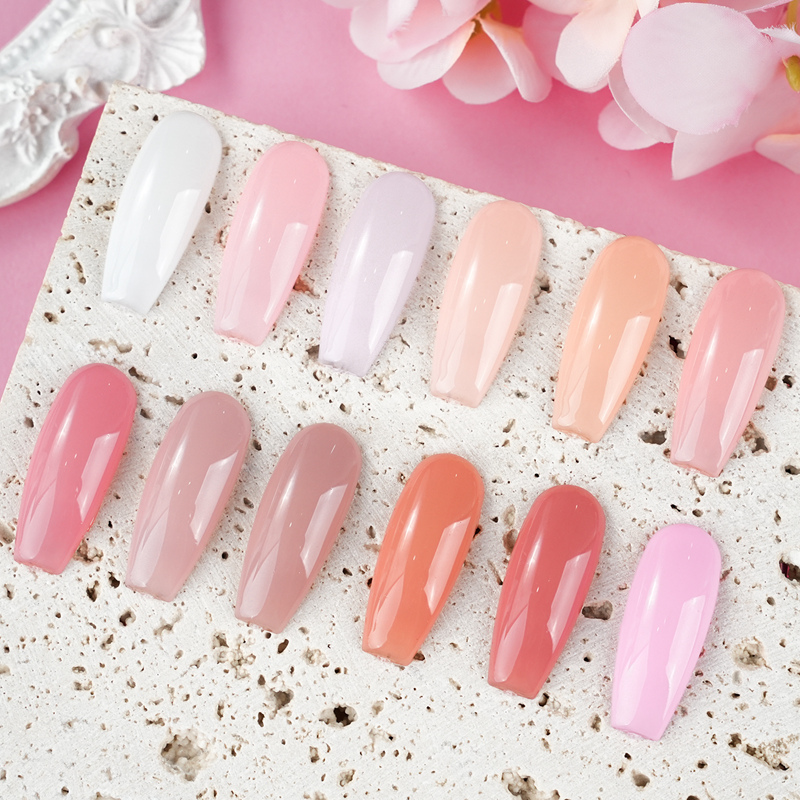
Shimmer gel polish contains fine reflective or pearlescent particles that create a delicate glow. The result is usually smoother and more refined than glitter. Depending on the base color, shimmer can appear elegant, clean, romantic, or slightly metallic.
Finish names alone do not provide enough information for a purchasing decision. Two products labeled glitter may perform very differently because of particle size, pigment concentration, base viscosity, and curing requirements. Buyers should request samples and evaluate the complete formula rather than relying only on catalog images.
| Parameter | Reflective Gel Polish | Glitter Gel Polish | Shimmer Gel Polish | Purchasing Meaning |
|---|---|---|---|---|
| Primary visual effect | Strong flash under direct light | Visible sparkle across the nail | Soft glow and pearlescent light movement | Choose according to customer demand and usage occasion |
| Particle size | Fine to medium reflective particles | Fine, medium, or chunky glitter | Very fine shimmer or pearl particles | Particle size affects texture, application, and removal |
| Coverage potential | Medium to high, depending on particle density | Sheer to high coverage | Usually sheer to medium, with some opaque formulas | Coverage influences inventory planning and layering demand |
| Texture after curing | May feel textured if particles are dense | Fine glitter can be smooth, while chunky glitter may remain raised | Usually smooth and even | Texture determines top coat consumption and customer comfort |
| Layering performance | Strong effect in one or two thin layers | Highly flexible for layering over color | Suitable for soft overlays and low-contrast designs | Layering increases the number of possible nail designs |
| Application difficulty | Moderate because particles must be distributed evenly | Easy with fine glitter and more demanding with chunky glitter | Generally easy when the formula levels well | Important for salons with high daily appointment volume |
| Risk of uneven distribution | Medium to high | Medium, especially with large particles | Low to medium | Uneven distribution creates rework and customer complaints |
| Removal effort | Medium to high | Medium to high | Usually low to medium | Removal time affects labor cost and appointment scheduling |
| Visual positioning | Trend-led and dramatic | Decorative and versatile | Elegant and everyday | Supports different price points and retail messages |
Reflective particles and dense glitter can reduce the amount of light reaching the lower layers of polish. A product that looks dry on the surface may remain undercured beneath dense particles. Shimmer formulas are often easier to cure because their particles are finer, but the exact result still depends on the base chemistry and pigment load.
During application, reflective gel polish often performs best in thin, even coats. A very thick layer may create an impressive color in the bottle but can lead to uneven curing, particle movement, or a rough surface. A magnetic tool is not always required, but a brush can help distribute particles from the center toward the sidewalls.
In actual salon use, reflective polish is more sensitive to brush pressure than shimmer polish. Pressing too hard can move particles away from the center of the nail. This is not necessarily a formula defect, but it increases the importance of technician training and consistent application technique.
Fine glitter gel polish is usually easy to apply and can be used alone or over a color base. Chunky glitter requires more attention because particles can overlap, stand above the nail surface, or extend beyond the free edge. A thicker top coat may be needed to create a smooth finish.
For busy salons, glitter is often the easiest finish to sell because customers can immediately see the sparkle. However, the purchasing team should estimate labor costs as well as product costs. A low-cost glitter shade may become less profitable if it consistently adds several minutes to application or removal.
Shimmer gel polish normally levels more smoothly because the particles are fine and evenly dispersed. It can be applied in thin layers and often produces a clean result with less correction. This makes it attractive for salons that serve customers who prefer natural, office-friendly, or low-maintenance nail designs.
In practical use, shimmer can also act as a reliable layering product. It may be applied over nude, pink, brown, red, or dark bases to create several visual effects without requiring a large color inventory. Its softer finish can support repeat purchases because customers can wear it in more situations.
There is no universal wear time for reflective, glitter, or shimmer gel polish. Wear depends on nail preparation, base coat flexibility, color coat thickness, top coat adhesion, lamp performance, customer lifestyle, and natural nail condition. A supplier should provide test results based on a complete application system rather than making unsupported claims from the finish alone.
Dense reflective particles and glitter may settle more quickly than fine shimmer particles. This can cause the first applications to look different from later applications if the bottle is not mixed consistently. Buyers should test the product after storage, transportation, and repeated opening rather than testing only a fresh sample.
Gel polish has no battery life. However, many mobile nail technicians use rechargeable LED lamps, so battery performance can affect the real use experience. A finish that requires a longer or more precise cure may consume more lamp power during a mobile service.
Reflective gel polish is most suitable for salons and brands that promote fashion-forward nail art, festival collections, evening services, or social media content. It can support a premium price when the visual effect is clear and the technicians can apply it consistently.
Glitter is a strong option for distributors and salons that need a versatile finish with immediate shelf appeal. A balanced collection can include fine glitter for daily use, medium glitter for salon designs, and selected chunky glitter shades for special events.
Shimmer is suitable for markets where customers want elegance, comfort, and flexibility. It is especially useful for salons serving office workers, mature customers, bridal clients, and people who want a polished finish that does not look overly bold.
When a distributor is entering a new market, a mixed collection is safer than committing to one finish. Shimmer can provide dependable everyday colors, glitter can create broad visual appeal, and reflective polish can generate attention for premium or trend-led launches.
Product images can exaggerate sparkle and do not show application behavior. Purchasing teams should test each finish on different nail lengths, base colors, and technician skill levels. The goal is to measure whether the product performs consistently during normal work, not only under ideal photography lighting.
A reliable supplier should provide information that helps buyers control quality and reduce service problems. This information is especially important for reflective and glitter formulas, where pigment density can influence curing and surface performance.
The lowest unit price does not always produce the highest profit. A formula that requires extra coats, longer curing, more top coat, or more removal time can increase the real cost of every appointment.
Reflective gel polish is the strongest choice when a market values dramatic effects, flash photography, and trend-driven collections. It can create strong promotional content and premium service opportunities, but it requires careful testing, controlled application, and clear customer education about how lighting changes the appearance.
Glitter gel polish is the most flexible option for broad decorative demand. It is easy to position for holidays, parties, weddings, and nail art. Fine and medium glitter are generally easier to manage, while chunky glitter should be selected when the salon is prepared for additional finishing and removal work.
Shimmer gel polish is the safest foundation for a collection that must appeal to everyday customers. It offers a refined appearance, usually supports efficient application, and can be used across professional, bridal, neutral, and seasonal services.
For most purchasing groups, the best strategy is not to choose only one finish. A collection built around shimmer, supported by versatile glitter, and enhanced with selected reflective shades can meet both stable everyday demand and trend-driven demand.
ISAYNAIL can help buyers evaluate finish selection through sample testing, application performance, curing compatibility, storage stability, packaging needs, and market positioning. By comparing real service results instead of judging sparkle from product images alone, buyers can select a more reliable collection and build stronger long-term value with a qualified Gel Polish Manufacturer.
Related Products
Nail Art Beauty, Nail Salon, Nail SPA, or Training
Nail Art Beauty, Nail Salon, Nail SPA, or Training
Nail Art Beauty, Nail Salon, Nail SPA, or Training
Nail Art Beauty, Nail Salon, Nail SPA, or Training
Nail Art Beauty, Nail Salon, Nail SPA, or Training
Nail Art Beauty, Nail Salon, Nail SPA, or Training

You can trust us to deliver the best nail products in the market
10 years experience manufacture
Navigation
Navigation
Contact Us
+86 156 2229 8411
802, No. 75, Hanxing Middle Road, Zhongcun Street, Panyu District, Guangzhou City, Guangdong Province, China